
CEDAR Digital Torque Tester WDIS-IPS / WDISR-IPS
The CEDAR (Sugisaki Meter, Japan) WDIS-IPS / WDISR-IPS digital torque testers measure the actual tightening torque of electric screwdrivers, torque screwdrivers and automatic screw tightening machines. Three detector capacities cover 2.0 mN·m to 20 N·m with ±0.5% accuracy and a 1000 data/s sampling rate, with four measuring modes (peak hold, first peak, real-time output and track). Pass/fail conditions can be stored in up to 10 channels; USB and RS-232C are standard, and the unit accepts commands from a PLC or PC. The WDIS-IPS runs on an AC adapter or AA batteries; the WDISR-IPS has a built-in rechargeable battery.
Manufacturer: CEDAR (Sugisaki Meter) | Category: Screw Tightening Accessories | Models: IPS05C, IPS5C, IPS20CL
Digital Torque Testers for Electric Screwdrivers and Automatic Tightening Equipment
The actual output torque of electric screwdrivers and automatic screw tightening machines drifts over time with clutch wear, motor aging or parameter changes. The CEDAR (Sugisaki Meter) WDIS-IPS and WDISR-IPS are digital torque testers made in Japan: tighten the tool directly on the compact detector to read the actual tightening torque, for start-of-shift checks, periodic verification and troubleshooting.
Both series share the same detectors and measuring functions. Three capacities cover 2.0 mN·m to 20 N·m with ±0.5% accuracy and a sampling rate of 1000 data per second. The color display shows pass/fail at a glance, and judgment conditions such as upper and lower limits can be stored in up to 10 channels, so a model changeover only needs a channel switch.
USB and RS-232C are standard for data output, with an optional wireless module. Besides sending readings, the unit accepts commands from a PLC or PC to clear values, switch measuring mode and channel, and change limits, so torque checks can be built directly into the inspection routine of automated equipment.
The two differ in power supply: the WDIS-IPS runs directly from an AC adapter or on 4 AA batteries, while the WDISR-IPS has a built-in rechargeable battery that runs 12 hours continuously on a 3-hour charge.
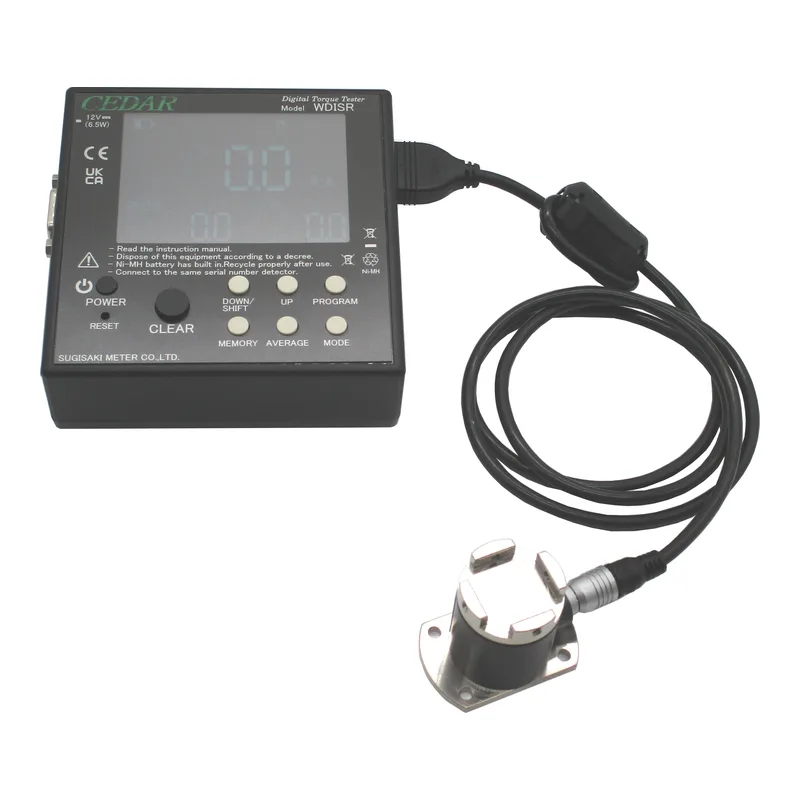
Two Indicator Types
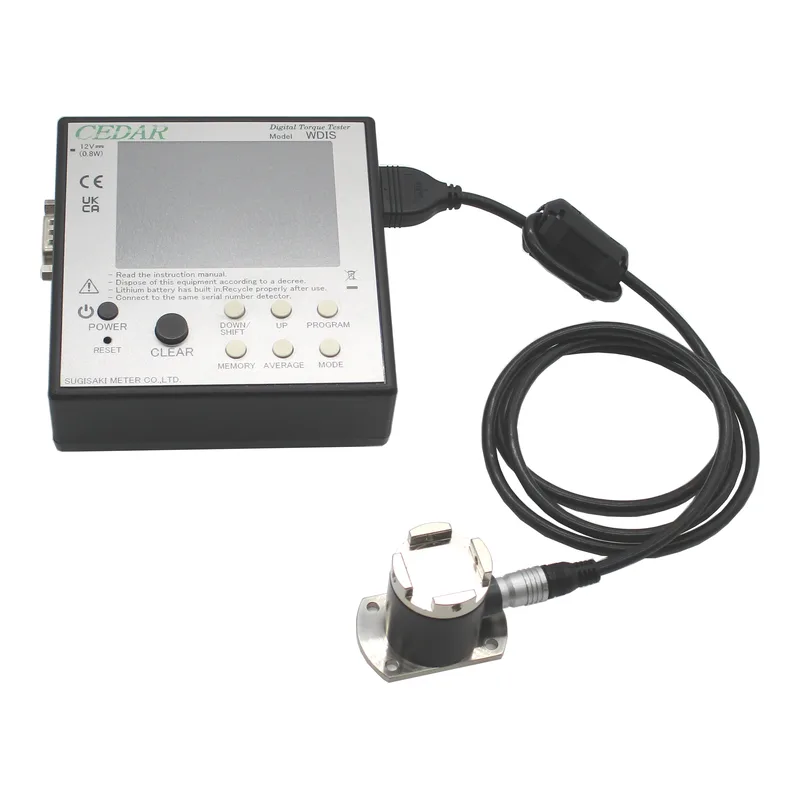
WDIS-IPS series
Powered directly by AC adapter, or 4 × AA batteries
WDISR-IPS series
Built-in rechargeable battery | 3 h charge, 12 h continuous use
Choose the Measuring Method for Your Tool
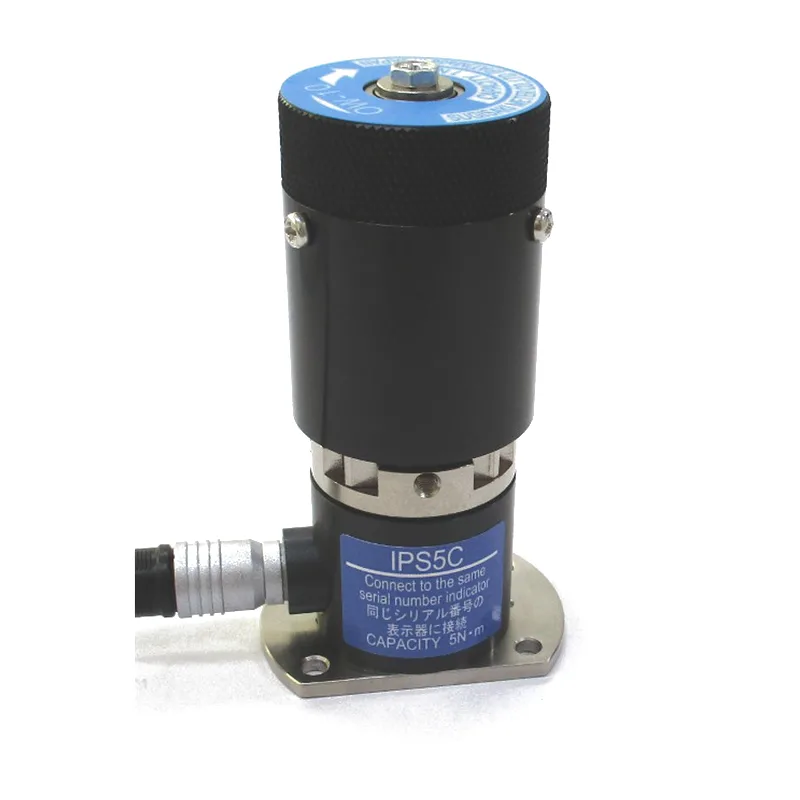
OW measuring joint
For electric screwdrivers that spin at high speed and stop when the clutch disengages
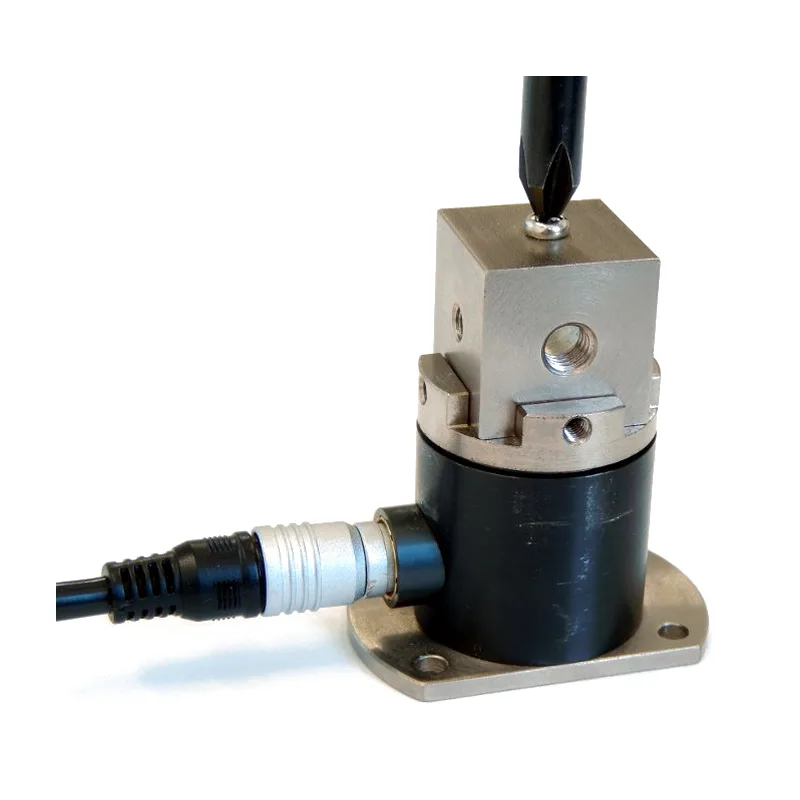
Screw cube SC-1 / SC-2 / SC-3
For equipment that re-tightens slowly under current control, such as screw tightening robots; screw holes from M1 to M10 on five faces
Detector Dimensions
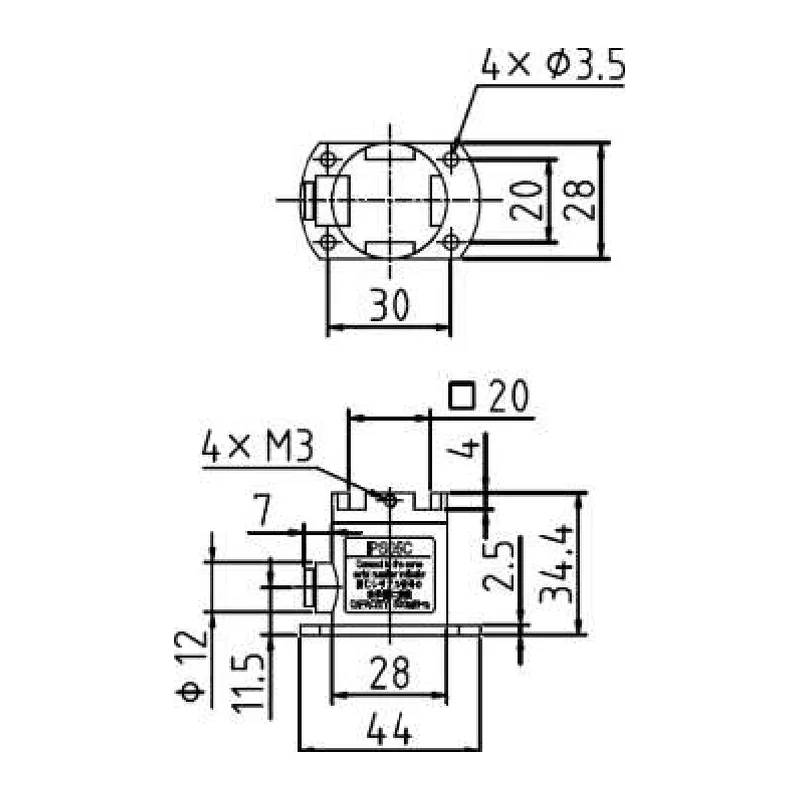
IPS05C / IPS5C
Base 44 × 28 mm, height 34.4 mm | Mounting holes 4 × φ3.5
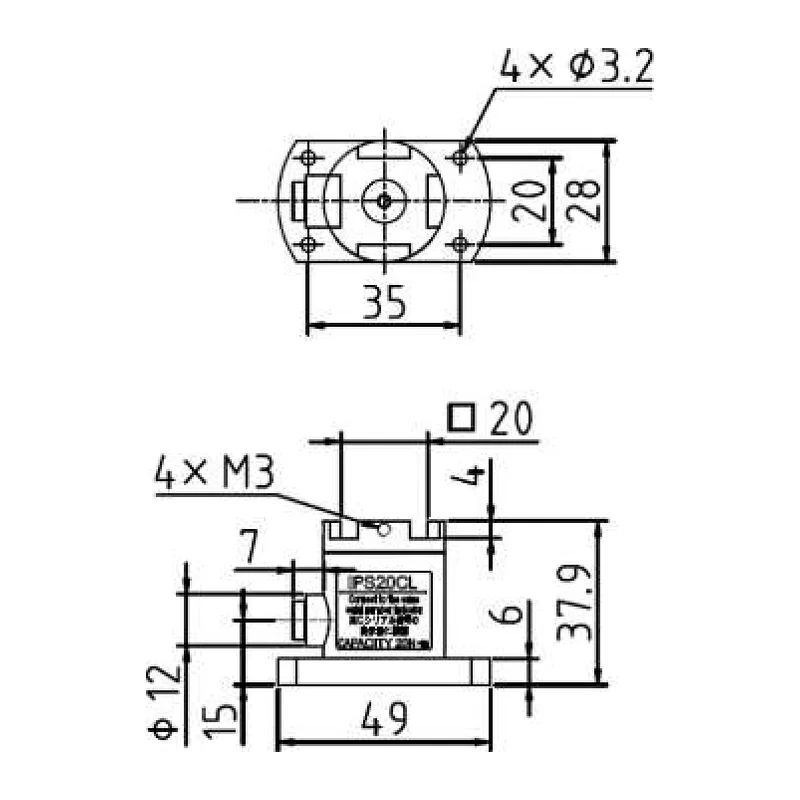
IPS20CL
Base 49 × 28 mm, height 37.9 mm | Mounting holes 4 × φ3.2
Models and Specifications
| Item | IPS05C | IPS5C | IPS20CL |
|---|---|---|---|
| Model (WDIS-IPS) | WDIS-IPS05C | WDIS-IPS5C | WDIS-IPS20CL |
| Model (WDISR-IPS) | WDISR-IPS05C | WDISR-IPS5C | WDISR-IPS20CL |
| Measuring range | 2.0~500.0 mN·m | 0.020~5.000 N·m | 0.20~20.00 N·m |
| Display units | mN·m, cN·m, kgf·cm, lbf·in | N·m, cN·m, kgf·cm, lbf·in | N·m, cN·m, kgf·cm, lbf·in |
| Accuracy | ±0.5% (±3 digits at 499 digits or less) | ||
| Sampling rate | 1000 data/s | ||
| Measuring direction | CW / CCW (clockwise and counterclockwise) | ||
| Measuring modes | PP peak hold, PD first peak, C real-time output (approx. 180 data/s), TR track (for calibration, no data output) | ||
| Pass/fail judgment | Upper and lower limits settable within the measuring range, result shown in color; up to 10 channels of conditions | ||
| Data memory | Up to 800 readings | ||
| Data output | USB and RS-232C standard (ASCII format); wireless with optional module | ||
| External control | Commands from a PLC or PC: clear, measuring mode and channel, upper/lower limits, auto-clear time, buzzer | ||
| Power (WDIS-IPS) | Direct from AC adapter, or 4 × AA batteries | ||
| Power (WDISR-IPS) | Built-in rechargeable battery: 3 h charge, 12 h continuous use; auto power-off after 10 min idle | ||
| Rated input voltage | 12V DC | ||
| Detector | IPS05C: base 44 × 28 mm, height 34.4 mm | IPS5C: base 44 × 28 mm, height 34.4 mm | IPS20CL: base 49 × 28 mm, height 37.9 mm |
| Socket | □20 mm | ||
| Detector cable length | 1 m / 2 m / 4 m (specify when ordering) | ||
| Included measuring joint | OW-025 | OW-10 | OW-20 |
| Included screw cube | SC-1 (screw holes on five faces: M1 / M1.2 / M1.4 / M2 / M3) | SC-2 (screw holes on five faces: M2.6 / M3 / M4 / M5 / M6) | SC-3 (screw holes on five faces: M4 / M5 / M6 / M8 / M10) |
| Other accessories | Detector cable, AC adapter, rubber feet × 4, inspection report, calibration certificate, traceability chart | ||
Highlighted rows differ between models; values shared by all models are merged into one cell.
Typical Applications
Start-of-shift checks and periodic verification of electric screwdrivers
Tighten the electric or torque screwdriver on the detector to read the actual tightening torque. The color display shows whether it is within the upper and lower limits, and up to 10 channels of conditions can be stored, so a model changeover only needs a channel switch.
Torque verification of automatic screw tightening machines and robots
Equipment that re-tightens slowly under current control is measured by actually tightening a screw into the screw cube. The unit accepts commands from a PLC or PC, so torque checks can be built into the machine's automatic inspection routine.
Torque waveform and first-peak analysis
Sampling at 1000 data/s, with about 180 data/s sent in real-time output mode, records how torque changes during tightening; first-peak mode (PD) captures the first peak of clutch-type screwdrivers.
Frequently Asked Questions
Should I choose the WDIS-IPS or the WDISR-IPS?
Both share the same detectors, measuring ranges, accuracy and functions; the difference is power. The WDIS-IPS runs directly from an AC adapter or on 4 AA batteries. The WDISR-IPS has a built-in rechargeable battery that runs 12 hours continuously on a 3-hour charge and powers off after 10 minutes idle. For a fixed test bench with a power outlet nearby, the WDIS-IPS is enough; to carry the tester from station to station without a power cord, choose the WDISR-IPS.
How do I choose among the three detector capacities?
Choose by the set torque of the tool you are testing: the IPS05C covers 2.0~500.0 mN·m for low-torque electric screwdrivers used on small screws, the IPS5C covers 0.020~5.000 N·m, and the IPS20CL covers 0.20~20.00 N·m. Accuracy is ±0.5%, but ±3 digits for readings of 499 digits or less, so keep your usual torque in the middle of the range rather than near the lower limit. The model number combines the indicator and detector, for example WDISR-IPS5C.
What is the difference between the OW measuring joint and the screw cube?
Both mount on the detector's □20 mm socket and are chosen by how the tool behaves. Electric screwdrivers that spin at high speed and stop when the clutch disengages are measured with the OW joint. Equipment that re-tightens slowly under current control, such as screw tightening robots, is measured by actually tightening a screw into the screw cube. Each set includes the OW joint (OW-025 / OW-10 / OW-20) and screw cube (SC-1 / SC-2 / SC-3) matching its capacity; the cube has different screw holes on five faces covering M1~M10.
Can it connect to a PC or PLC?
Yes. USB and RS-232C are both standard and readings are output in ASCII format; an optional wireless module allows wireless transfer. A PLC or PC can also send commands to the unit, such as clearing and saving the current value, switching measuring mode and channel, changing upper and lower limits, and setting the auto-clear time and buzzer notification, so torque checks can be built into a machine's automatic inspection routine.
What documents come with it, and what do I specify when ordering?
Each unit ships with an inspection report, calibration certificate and traceability chart. The indicator and detector are paired by serial number, so use them as a matched set. Besides the indicator and detector models, specify the detector cable length (1 m, 2 m or 4 m), packing (cardboard box or PP carrying case) and AC adapter plug type. Tell us the tools and torque range you use when you inquire, and we will help confirm the configuration.
Other Accessories Models
- Manual Pick-Up Screw Feeder (for Manual Stations) — RONYI manual pick-up screw feeders serve manual tightening stations: operators pick screws directly from the pick-up point with the bit of an electric screwdriver instead of pinching small screws by hand. Rotary-disc, cross-shaped separation presents one screw at a time at a fixed position. Three models cover M0.8–M6.0 screws with hoppers of 80–600CC, with digital settings, counters and automatic jam clearing.
- PRO-CHK Torque Meter — The PRO-CHK digital torque meter is used for torque calibration and checking of electric screwdrivers and automatic screw tightening machines. Measuring range is 20–5000 mN·m (0.204–51.02 kgf·cm) with ±0.5% accuracy. It offers four measuring modes (PP / PD / CT / TR) and pass/fail judgment against upper and lower limits, stores 800 readings and outputs data in ASCII format.
- Screw Refill Hopper — RONYI screw refill hoppers sit beside a screw feeder and keep topping it up according to their settings, reducing line stops for refilling. The RY-120 holds 600CC and the RY-140L 800CC, both for M2.0–M6.0 screws (head thickness over 1.0mm, total length under 29mm), with digital settings for the drive motor, detection time and number of refills.
- Vacuum Pick-Up Screw Feeder (for Automation) — RONYI vacuum pick-up screw feeders (automation models, also called screw presenters) use rotary-disc, cross-shaped separation to deliver bulk screws one at a time, in a fixed orientation, to the pick-up point, where the tightening spindle of an automatic screw tightening machine or robot picks them up with a vacuum nozzle. Four models cover M0.8–M6.0 screws with thread lengths up to 30mm and hoppers of 80–900CC; the drum, disc and vibration motors are digitally adjustable, with counters and automatic jam clearing.
A key-spec comparison of every model, with selection notes and FAQs, is in the Accessories selection guide.